Network changes affecting latencyBackground
Starlink reports 25.7 ms median peak-hour latency for US customers
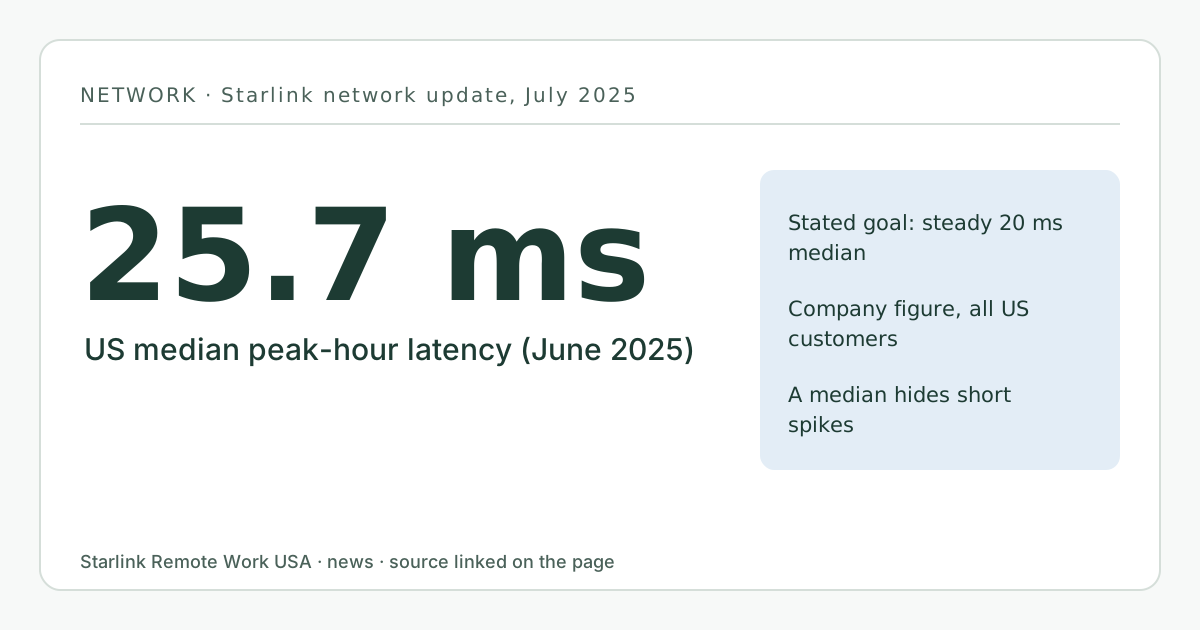
In a network update posted July 16, 2025, Starlink said that as of June 2025 it was delivering a median peak-hour latency of 25.7 ms across all US customers, with a goal of a steady 20 ms median. A median says nothing about the short spikes and drops that freeze calls, so it doesn’t replace a per-hour view of one connection. Published October 6, 2026.
- Event date
- Published here
- Updated
- Source
- The Register
Background itemThis happened 447 days before we published it (more than 90). It is here as context for the guides it links, not as breaking news. Check the source for anything that has changed since.
What changed
On July 16, 2025, Starlink posted a network update with new performance figures. The headline number for remote workers: as of June 2025, Starlink said it was delivering a median peak-hour latency of 25.7 ms across all its customers in the United States. It also restated a goal of a steady 20 ms median.
The Register’s coverage of the same update lists other company figures: a US median peak-hour download near 200 Mbps, more than 100 gateway sites, more than 7,800 active satellites, a combined capacity of “nearly 450 Tbps”, and a target of the first half of 2026 for launching third-generation satellites on Starship.
When
- Update posted: July 16, 2025.
- Period the latency figure describes: June 2025.
Who is affected and what it means for you
Every US Starlink customer is in that median, so it is useful context. But a median latency is a single middle value. Half the measurements are above it, and it tells you nothing about the moments that actually break a work day:
- Short spikes and drops. A video call can freeze for two or three seconds when the dish hands off between satellites or loses a few packets. Those events barely move a monthly median.
- Jitter. Calls care about how much latency varies from one packet to the next, not just its typical value. Microsoft’s network test for Teams, for example, expects jitter under 30 ms and loss under 1%.
- Your own sky. Obstructions at your site add drops that a network-wide median can’t show.
So 25.7 ms is good news for gaming ping and for the feel of web browsing, and a sign that Starlink’s network has improved. It isn’t, by itself, a promise that calls will be clean. That’s why our Work-Day Reliability Report is built around per-hour p95 latency, jitter and loss on one connection, labeled as one connection.
What you can do now
- Look at your own numbers, not the median. The Starlink app shows latency and outages for your dish. Note how often you see drops during work hours, not just the average.
- Run a real call test. Microsoft and Zoom both offer network tests. Our video calls guide lists what each one checks and the thresholds that matter.
- For gamers, our gaming verdict explains why a low median ping can still feel uneven in fast shooters.
What stays the same
- Starlink’s US specifications page, as we last checked it, does not list a latency number; it points to the coverage map.
- CGNAT, the 1,200-session limit on Residential, and the public IP rules are unchanged by this update.
- A median from Starlink is a company figure. We label it that way on every page that uses it.
What we don’t know yet
- How Starlink computes the median: which test targets, how often, and whether it is per customer or per measurement. The update gives the result, not the method.
- How the figure has moved since June 2025. Starlink’s 2025 progress report gives a global median of about 26 ms but not, in the coverage we read, a new US-only number.
- Our own logger had not started in July 2025, so we have no measured month to compare.
Note on sources: Starlink’s update page loads its text with JavaScript, so we cite The Register’s report of it, which we read on the retrieval date below, and link Starlink’s page as well.
This item is background: the update came out more than 90 days before we published this page.
Source
Starlink says SpaceX targeting 2026 for launch of Starship-ready terabit satellites (The Register)
Also cited
Related guides on this site
Correction log
No corrections since publication. Spotted an error? See corrections for how to tell us; changes are logged here with the date.