Network changes affecting latencyBackground
Starlink’s 2025 progress report gives a global median latency of about 26 ms
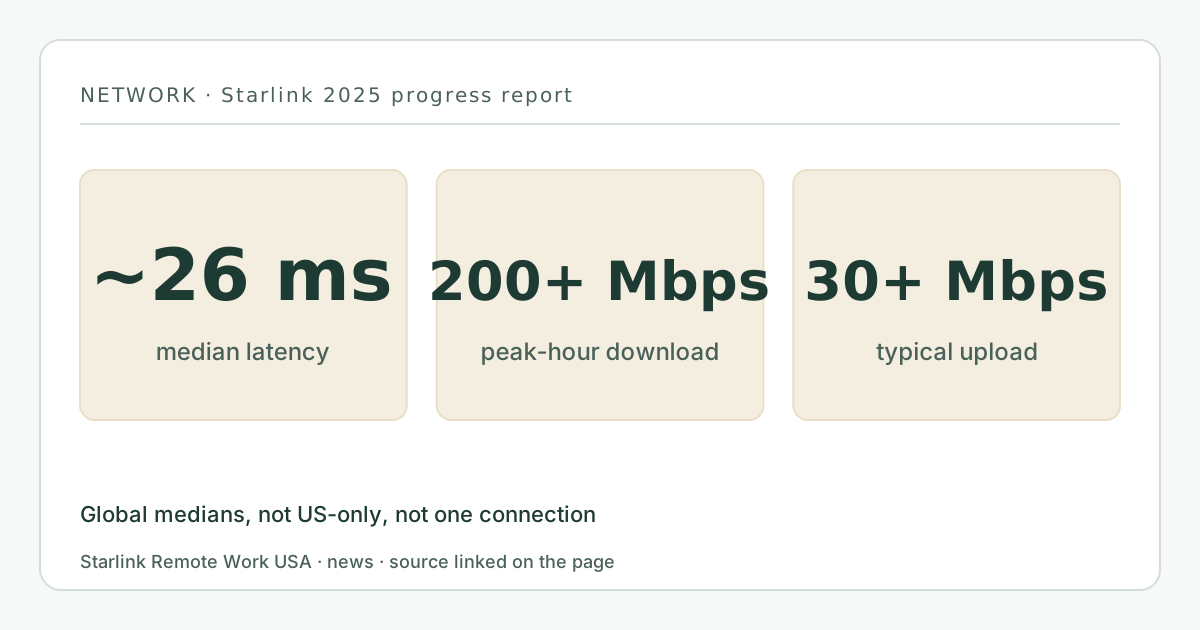
Starlink’s 2025 progress report, covered by DishyTech on January 3, 2026, gives a global median latency of about 26 ms, peak-hour downloads above 200 Mbps and uploads typically above 30 Mbps, and says it added about 4.6 million customers in 2025. These are company-wide medians, not US-only or per-connection numbers. Published October 6, 2026.
- Event date
- Published here
- Updated
- Source
- DishyTech
Background itemThis happened 276 days before we published it (more than 90). It is here as context for the guides it links, not as breaking news. Check the source for anything that has changed since.
What changed
Starlink published its 2025 progress report, its third yearly report, by early January 2026. DishyTech covered it on January 3, 2026, and Quilty Space published a summary on January 6. The report is a PDF on starlink.com.
The figures most relevant to remote work, as reported by DishyTech:
- Median global latency of about 26 ms.
- Peak-hour download speeds above 200 Mbps, with uploads typically above 30 Mbps.
- Global median speeds up about 50%.
- About 4.6 million customers added in 2025, for more than 9 million in total.
- About 270 Tbps of network capacity added in 2025, and more than 9,000 satellites in the constellation.
Quilty’s summary adds that Starlink credits its laser links between satellites with a two- to three-fold reduction in packet loss and 30 to 40 ms lower latency in parts of Asia and Africa, and says 400 Gbps laser links begin in 2026.
When
- Report out: by January 3, 2026 (the PDF itself doesn’t carry a date we could read).
- Period covered: calendar year 2025.
Who is affected and what it means for you
These are network-wide figures, so they describe everyone and no one in particular. They’re useful for one thing: the direction of travel. Speeds and capacity grew a lot in 2025, and upload, the number that matters most for video calls and large file transfers, is reported as typically above 30 Mbps.
For calls, that upload figure is more than enough on paper. Zoom’s 1080p video uses about 3.8 Mbps up, and Teams recommends 2.5 Mbps up for meetings. What breaks calls is usually not average bandwidth but short drops, jitter, and uploads from other people in the house saturating the link. Our uploads guide covers why one big upload can freeze your call, and our video calls guide lists what each call app actually needs.
The global latency figure (about 26 ms) is in line with the 25.7 ms US median peak-hour figure Starlink gave in July 2025. The two are not the same measurement, so don’t read the small difference as a change.
What you can do now
- Compare your own upload under load with the reported typical figure. If your upload during a call is far below it, look at obstructions, Wi-Fi and other people’s uploads first.
- Treat company medians as context, not as a forecast for your address. Our Work-Day Reliability Report shows one connection by hour, labeled as one connection.
What stays the same
- No plan, price, CGNAT or IP policy changes are part of the report.
- Starlink’s US specifications still don’t list a latency number, as of our last check.
What we don’t know yet
- The report’s methods: how latency and speeds are measured and weighted.
- A US-only latency figure for late 2025, if the report has one; the coverage we read gives the global median.
- The PDF was too large for our tools to read in full on the retrieval date, so the figures above come from DishyTech’s and Quilty Space’s reports of it.
This item is background: the report came out more than 90 days before we published this page.
Source
Starlink Just Had A Massive 2025 — And 2026 Could Be Even Bigger (DishyTech)
Also cited
Related guides on this site
Correction log
No corrections since publication. Spotted an error? See corrections for how to tell us; changes are logged here with the date.