Network changes affecting latencyBackground
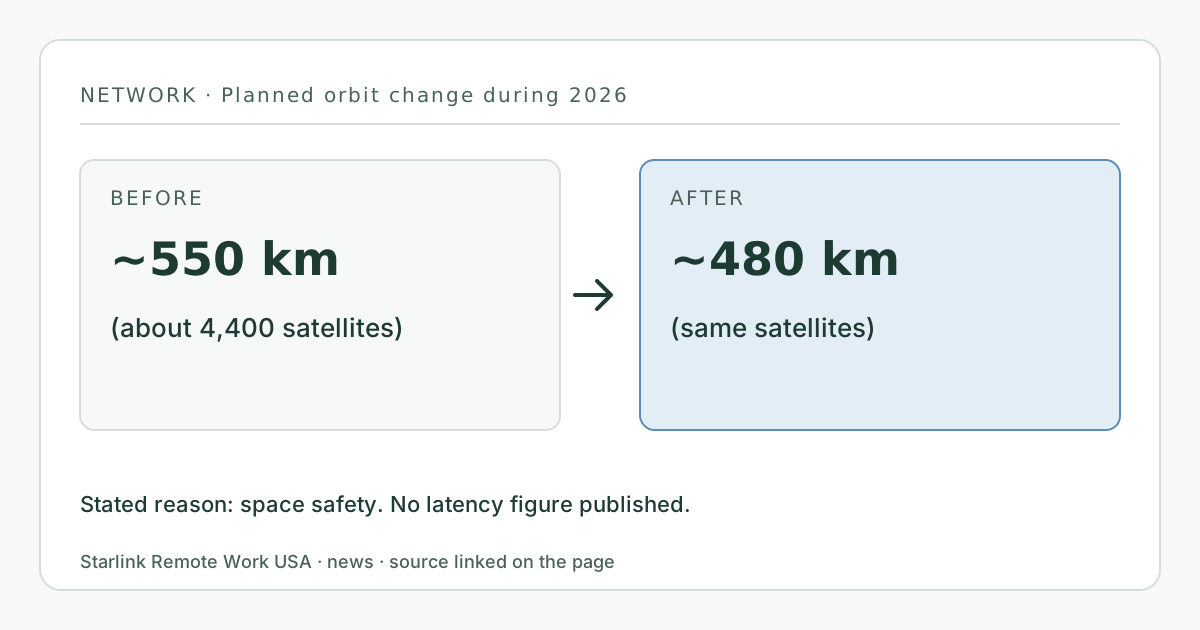
Starlink says it will lower about 4,400 satellites from 550 km to 480 km during 2026
On January 1, 2026, Starlink VP of engineering Michael Nicolls said Starlink will lower about 4,400 satellites, all of those near 550 km, to about 480 km over 2026. The stated reason is space safety: failed satellites fall out of orbit much faster at the lower height. Starlink has not published any latency change tied to the move, so watch the numbers rather than expect a difference. Published October 6, 2026.
- Event date
- Published here
- Updated
- Source
- Cord Cutters News
Background itemThis happened 278 days before we published it (more than 90). It is here as context for the guides it links, not as breaking news. Check the source for anything that has changed since.
What changed
On January 1, 2026, Michael Nicolls, Starlink’s VP of engineering, said in a post on X that Starlink will lower about 4,400 satellites, all of those orbiting near 550 km, to about 480 km over the course of 2026. Cord Cutters News reported the announcement the same day.
The reason given is space safety. Nicolls wrote that “Lowering the satellites results in condensing Starlink orbits, and will increase space safety in several ways.” At the lower height, a satellite that fails falls out of orbit and burns up much sooner. Coverage of the announcement says the time to decay drops from more than four years to a few months during the solar minimum.
When
- Announced: January 1, 2026.
- Timeline: during 2026. Starlink did not give a month-by-month schedule in the coverage we read.
Who is affected and what it means for you
In principle, every Starlink customer, because these satellites carry a large share of the network’s traffic. In practice, Cord Cutters News reported that customers should not notice any service change, and Starlink didn’t tie the move to a latency number.
You may see claims elsewhere that lower satellites mean lower latency. The physics points that way: 70 km less distance up and back is a small amount of time. But the light-travel time to a satellite is a small part of what you feel on a call. Routing through ground stations, the internet path to the call server, congestion at busy hours and handoffs between satellites usually matter more. We won’t claim a latency effect until there is data for it.
There is a second, quieter effect to watch. While satellites are being moved, the constellation is changing shape. If that briefly affects coverage or handoffs in some areas, it would show up as short drops rather than a change in average latency.
What you can do now
- Nothing is required. There is no setting to change and no action to take.
- If you track your own connection, keep doing it through 2026 and note any step change in latency or drop rate. Our report method page explains how the owner’s logger records latency and drops every minute, and how you can run the same logger at home.
- Watch our Work-Day Reliability Report once the logger has published months; we’ll flag any sustained change and say what we do and don’t know about its cause.
- Gamers: our gaming verdict explains which parts of ping a lower orbit could and couldn’t change.
What stays the same
- Plans, prices, CGNAT and IP policy are unaffected.
- Your dish and router don’t need changes.
What we don’t know yet
- Whether Starlink will publish a before-and-after latency figure for the move.
- The schedule: how many satellites move each month, and when the move is finished.
- We couldn’t read the original X post directly, so we rely on press coverage of it for the quote and figures.
This item is background: it was announced more than 90 days before we published this page.
Source
Starlink To Lower Thousands of Satellites in Orbit in 2026 To Boost Space Safety (Cord Cutters News)
Related guides on this site
Correction log
No corrections since publication. Spotted an error? See corrections for how to tell us; changes are logged here with the date.