Major outages and post-mortemsBackground
Cloudflare outage on December 5, 2025 affects about 28% of its HTTP traffic for 25 minutes
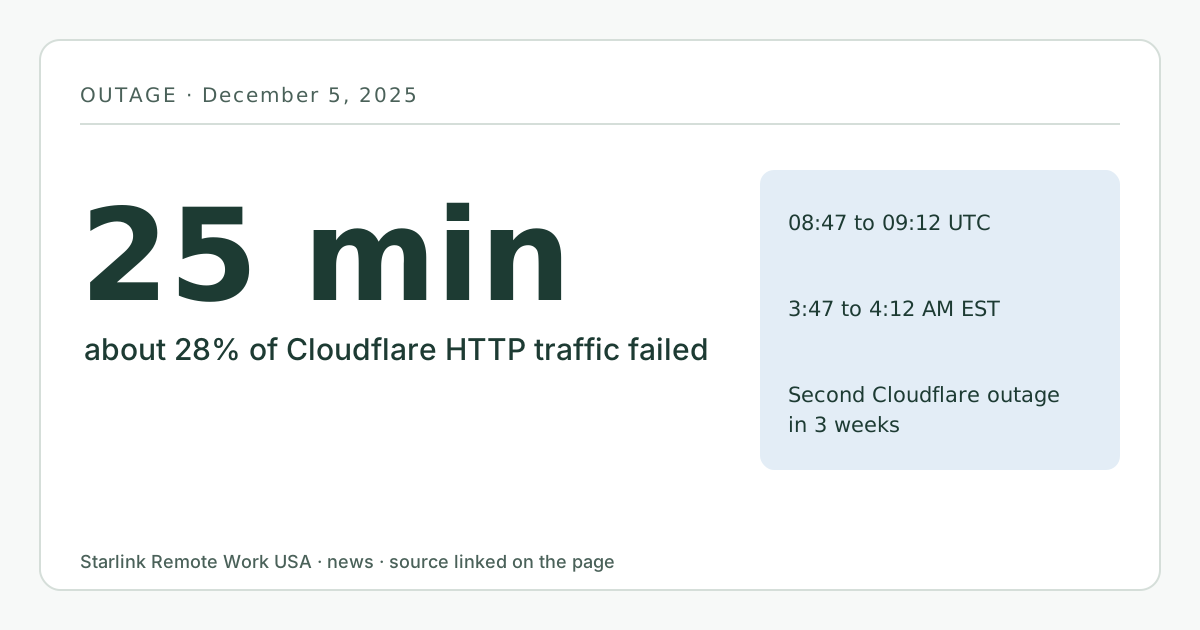
From 08:47 to 09:12 UTC (3:47 to 4:12 a.m. EST) on December 5, 2025, about 28% of the HTTP traffic Cloudflare serves failed after a configuration change triggered an error in its proxy software. It was short and came before the US work day, but it was the second Cloudflare outage in three weeks. Published October 6, 2026.
- Event date
- Published here
- Updated
- Source
- Cloudflare blog
Background itemThis happened 305 days before we published it (more than 90). It is here as context for the guides it links, not as breaking news. Check the source for anything that has changed since.
What changed
On December 5, 2025, Cloudflare had a short outage: for about 25 minutes, roughly 28% of the HTTP traffic it serves failed. It came less than three weeks after its much longer November 18 outage.
Cloudflare’s post-mortem says a configuration change meant to disable an internal testing tool for its web application firewall was applied globally at once, without a gradual rollout. In one version of its proxy software (which Cloudflare calls FL1), the change triggered an error in the rules module, and requests failed.
Cloudflare wrote: “Any outage of our systems is unacceptable, and we know we have let the Internet down again following the incident on November 18.”
Two weeks later, on December 19, 2025, Cloudflare published a resilience plan it called “Code Orange: Fail Small,” aimed at rolling out changes more gradually so one mistake can’t reach the whole network at once.
When
- Start: 08:47 UTC on December 5, 2025 (3:47 a.m. EST).
- End: 09:12 UTC (4:12 a.m. EST).
- Duration: about 25 minutes.
Who is affected and what it means for you
Most US remote workers slept through this one; it ended before 4:15 a.m. on the East Coast and before 1:15 a.m. on the West Coast. Early shifts, overnight workers and anyone working with Europe would have noticed sites behind Cloudflare failing.
The bigger point is the pattern. Two Cloudflare outages in three weeks show how much of a normal work day depends on a few large networks that you don’t control and can’t route around. A second internet line protects your path to the internet. It doesn’t protect the services at the far end.
What you can do now
- Learn to recognize a third-party outage: many unrelated sites showing similar error pages at the same moment, while the Starlink app shows your dish online with normal latency.
- Bookmark status pages for the services your work depends on, and check them before restarting equipment.
- Keep your backup line plan focused on what it can fix: dish, satellite network and local carrier failures.
- Our troubleshooting page lists failures that are on your side and how to spot them.
What stays the same
- Starlink’s network was not involved.
- Nothing you could have changed at home would have prevented it.
What we don’t know yet
- Cloudflare gives a share of traffic, not a count of affected sites or users.
- Whether the December 19 resilience plan will reduce outages is something only time will show; we’ll note any later Cloudflare post-mortems here.
This item is background: it happened more than 90 days before we published this page.
Source
Cloudflare outage on December 5, 2025 (Cloudflare blog)
Also cited
Related guides on this site
Correction log
No corrections since publication. Spotted an error? See corrections for how to tell us; changes are logged here with the date.