Network changes affecting latency
Starship deploys the first 26 Starlink V3 satellites; SpaceX says they should serve customers within weeks
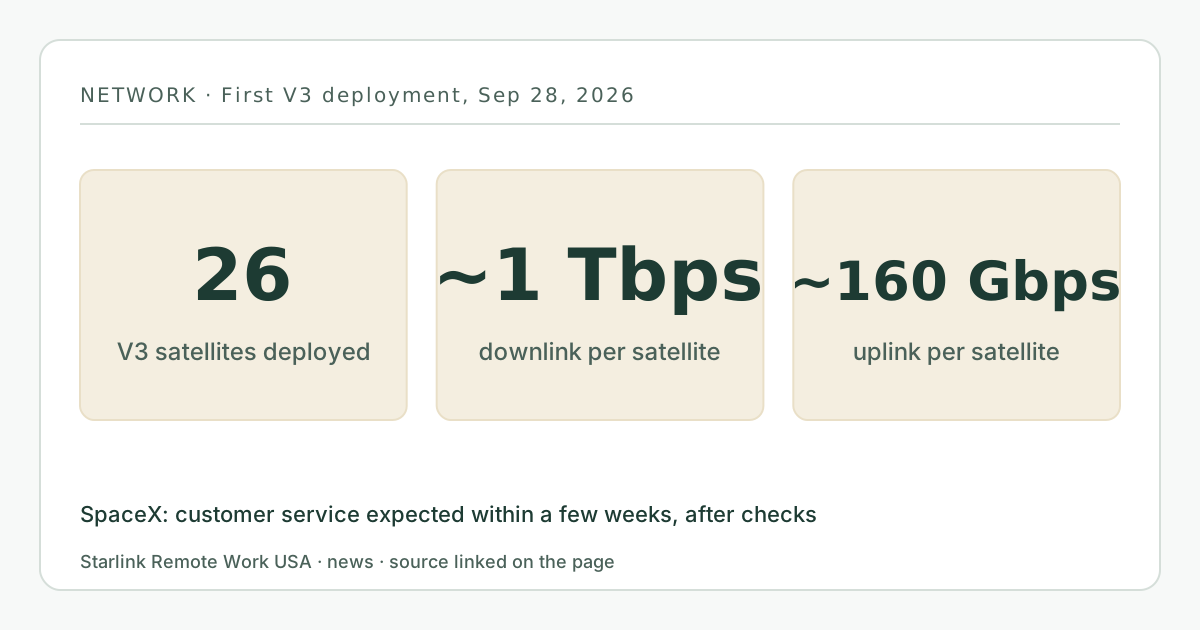
On September 28, 2026, Starship reached orbit for the first time and deployed 26 Starlink V3 satellites, each with about 1 Tbps of downlink and 160 Gbps of uplink capacity, according to Light Reading. SpaceX said it made contact with all 26 and expects them to start serving customers within a few weeks after checks. Twenty-six satellites are a small share of a constellation of thousands, so don’t expect a change at your desk yet.
- Event date
- Published here
- Updated
- Source
- Light Reading
What changed
On September 28, 2026, SpaceX’s Starship reached orbit for the first time and deployed 26 Starlink V3 satellites, the third generation of the design. Light Reading reported the launch from Starbase, Texas. One upper-stage engine was lost during ascent, but the vehicle reached orbit, released the satellites, and later came down in a controlled splashdown in the northern Pacific.
According to Light Reading, each V3 satellite supports about 1 Tbps of downlink and 160 Gbps of uplink capacity, roughly 10 times the downlink and 22 times the uplink of V2 satellites. SpaceX said it had made contact with all 26 and, after checks, expects “those V3s to start serving customers within a few weeks.” A full Starship can carry up to 60 V3 satellites.
When
- Launch and deployment: September 28, 2026.
- Customer service: “within a few weeks,” per SpaceX, with no date given.
Who is affected and what it means for you
In the long run, V3 matters most for upload, the weak side of satellite internet for work. Video calls, cloud backups, screen sharing and large file uploads all lean on upload capacity, and evening congestion hits it hard. A big jump in uplink capacity per satellite is the change that could make upload hold up better at busy times.
In the short run, 26 satellites are a small fraction of a constellation of thousands, and they will cover only part of the globe at any moment. Don’t expect a change at your desk this month. It will take many Starship launches before V3 satellites make up a meaningful share of the network.
The milestone also follows the July 2025 network update, in which Starlink said it was targeting the first half of 2026 for the first V3 launches. The first deployment came in late September.
What you can do now
- Nothing is required. There’s no setting or hardware change for customers.
- If upload is your bottleneck today, the fixes are still at home: stop large uploads during calls, use a wired connection for your work computer, and set upload limits on backup software. Our uploads guide explains why one big upload can freeze a call.
- Two people on calls at once? Our two remote workers guide covers planning upload for both.
- Watch measured data, not launch news. Our Work-Day Reliability Report will show upload under load by hour on one connection once months are published.
What stays the same
- Plans, prices, CGNAT and IP policy are unaffected.
- The coverage we read does not say customers need new hardware for V3.
What we don’t know yet
- When V3 satellites will carry customer traffic in the US, and how much.
- How often Starship will launch more V3 satellites.
- Whether added upload capacity will show up on Residential plans or mainly on business plans first.
Source
Starship reaches orbit, releases 26 high-capacity V3 Starlink satellites (Light Reading)
Related guides on this site
Correction log
No corrections since publication. Spotted an error? See corrections for how to tell us; changes are logged here with the date.