Major outages and post-mortemsBackground
Slack outage on May 27, 2026 disrupts messaging, workflows and apps worldwide
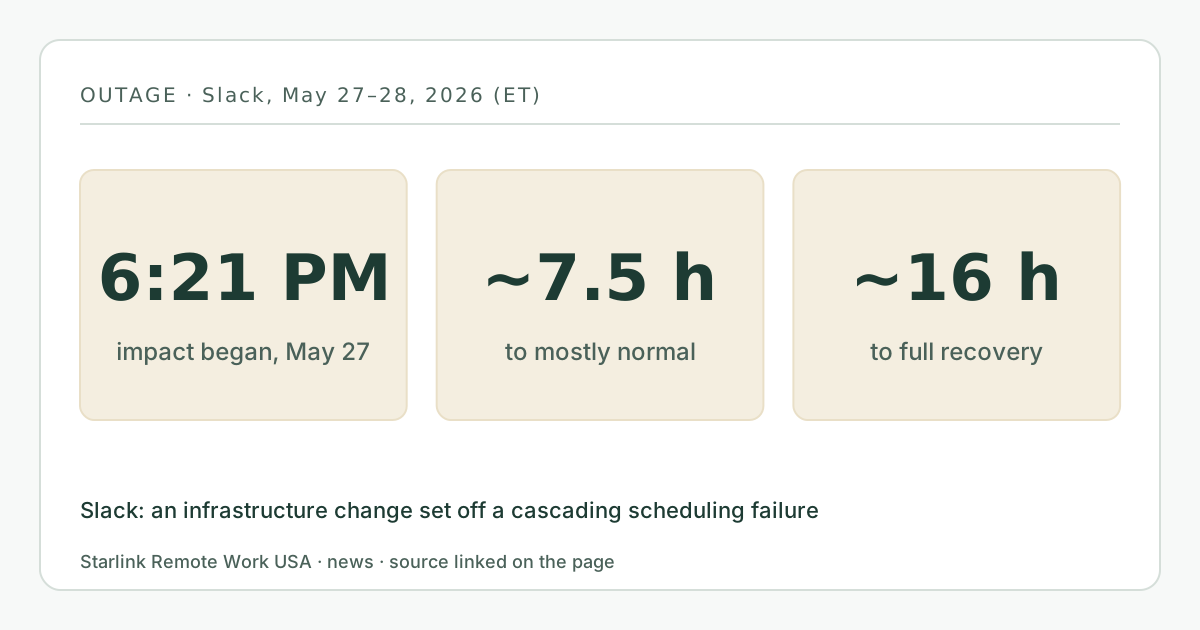
Starting at 22:21 UTC on May 27, 2026 (6:21 p.m. EDT), Slack users worldwide had trouble with messaging, workflows, apps, integrations, canvases and connections. Slack said that following an infrastructure change, a cascading scheduling failure caused the impact; services were largely back to normal late that night Pacific time, and leftover permission problems were fixed at 14:13 UTC on May 28. It was a Slack failure, not a home internet one. Published October 6, 2026.
- Event date
- Published here
- Updated
- Source
- Slack Status
Background itemThis happened 132 days before we published it (more than 90). It is here as context for the guides it links, not as breaking news. Check the source for anything that has changed since.
What changed
On the afternoon of May 27, 2026, Pacific time, Slack had a global outage. Slack’s status page says users “experienced difficulties accessing Slack features, including Messaging, Workflows, Apps, Integrations, APIs, Canvas, and Connections.” Early updates also listed trouble with message edits, channel renames and channel creation, and later ones described empty @-mention pills, delayed reactions and slow-loading messages.
Slack’s stated cause: “Following an infrastructure change, a cascading scheduling failure caused widespread service impact across all regions and clients.” Messaging recovered first, then workflows. Workflow jobs that ran during the disruption were replayed. The next morning, a second wave of permission problems appeared (managing channels, updating statuses, saving Canvas edits), which Slack put down to “residual stale cache data.”
When
- Start: 22:21 UTC on May 27, 2026 (6:21 p.m. EDT, 3:21 p.m. PDT), per Slack’s summary. The first status post was at 4:00 p.m. PDT.
- Mostly restored: Slack said services had “largely returned to normal operational levels” at 10:47 p.m. PDT on May 27 (1:47 a.m. EDT on May 28).
- Fully resolved: 14:13 UTC on May 28 (10:13 a.m. EDT), after a cache deployment fixed the leftover permission issues.
Who is affected and what it means for you
Slack users on any connection, worldwide. On the East Coast the main outage hit after hours, but West Coast teams lost the end of their workday, and the morning permission problems landed at the start of the next US workday.
Partial failures like this are easy to mistake for a bad connection: some messages send, others hang, avatars and links load slowly. If other apps and sites were working at the same time, the problem was Slack’s, and a backup internet line would not have helped.
What you can do now
- Check Slack’s status page, or ask a colleague, before restarting your router or switching lines.
- Check your own link in the Starlink app. No outages listed and other sites loading means the problem is upstream.
- Keep a second way to reach your team for urgent work: phone, email or a meeting link.
- If you rely on Slack workflows, check afterward whether jobs that ran during an outage completed. Slack said some did not and were replayed.
- Our troubleshooting page lists the failures that are on your side.
What stays the same
- Nothing changed in how Slack uses your connection.
- Starlink and home internet were not involved.
What we don’t know yet
- What the infrastructure change was. Slack said it would investigate “the technical trigger, the mechanism of failure, and preventative measures”; we had not found a public post-incident report by October 6, 2026.
- How many users were affected. The status page says the issue “affected Slack users globally” but gives no count.
- One line in Slack’s final summary dates the return to normal as “05:45 UTC on May 27,” which can’t be right given a 22:21 UTC start the same day; we read it as May 28, which matches the 10:47 p.m. PDT status update.
This item is background: it happened more than 90 days before we published this page.
Source
Trouble with Slack - General Slack functionality issues (Slack Status)
Related guides on this site
Correction log
No corrections since publication. Spotted an error? See corrections for how to tell us; changes are logged here with the date.