Network changes affecting latencyBackground
FCC approves 7,500 more Starlink Gen2 satellites and new spectrum
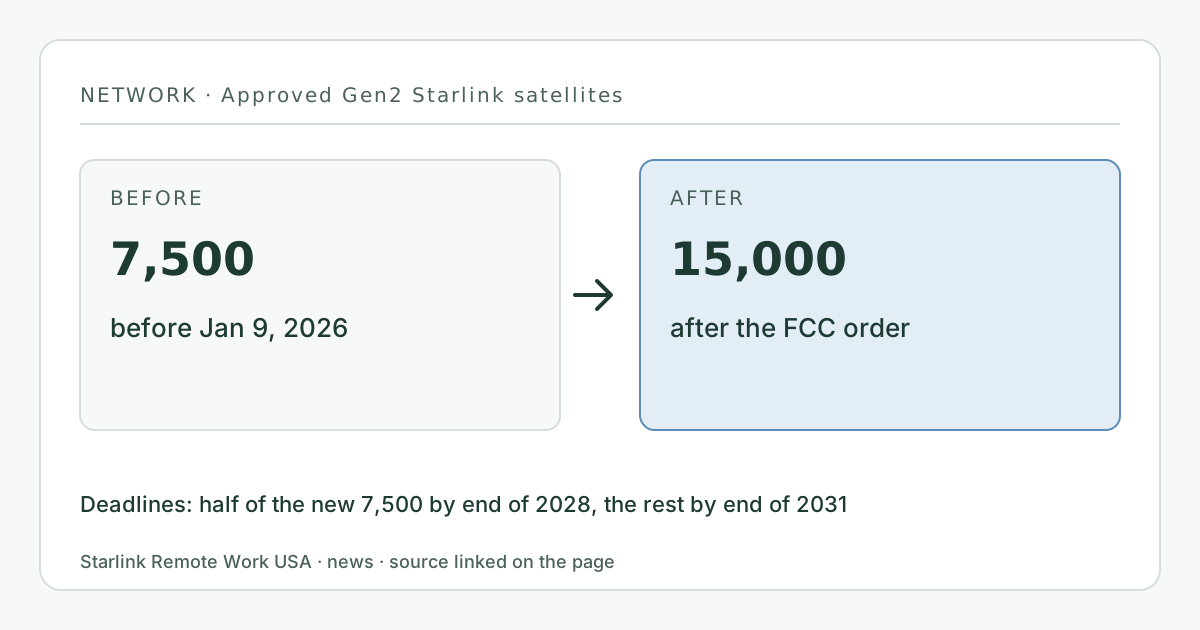
On January 9, 2026, the FCC approved SpaceX’s request for 7,500 more Gen2 Starlink satellites, bringing the approved Gen2 total to 15,000, and granted more spectrum and higher power in some bands. Half of the new satellites must be deployed by the end of 2028 and the rest by the end of 2031. More satellites and spectrum add capacity over years, not overnight. Published October 6, 2026.
- Event date
- Published here
- Updated
- Source
- Broadband Breakfast
Background itemThis happened 270 days before we published it (more than 90). It is here as context for the guides it links, not as breaking news. Check the source for anything that has changed since.
What changed
On January 9, 2026, the Federal Communications Commission approved SpaceX’s request to deploy 7,500 more second-generation (Gen2) Starlink satellites. That doubles the number of Gen2 satellites SpaceX may operate to 15,000. Broadband Breakfast reported that SpaceX had about 5,000 Gen2 satellites in orbit at the time.
It was a partial approval. SpaceX had asked for far more; the FCC granted part of the request. The order also:
- lets SpaceX use additional spectrum bands and operate at higher power in some bands;
- allows satellites to operate as low as 340 km;
- sets deadlines: at least half of the newly approved satellites must be deployed and operating by the end of 2028, and the rest by the end of 2031.
According to Broadband Breakfast, SpaceX said the extra spectrum and power would allow “fiber-like service” with symmetrical download and upload speeds for rural homes and businesses. That is SpaceX’s stated aim, not something the order guarantees.
When
- FCC order released: January 9, 2026 (FCC document DA-26-36).
- Deployment deadlines: end of 2028 for half of the new satellites, end of 2031 for the rest.
Who is affected and what it means for you
Over time, more satellites and more spectrum mean more capacity. More capacity is what eases evening congestion and helps uploads hold up when many people in an area are online. For remote workers, the hope is fewer slow afternoons and steadier upload during calls.
But the timeline is years, not weeks. Satellites have to be built and launched, and Starlink decides how to spend new capacity: on new customers, on faster plans, on direct-to-phone service, or on existing users’ experience. The order itself doesn’t change anything at your desk today.
The “symmetrical” upload claim is worth watching closely. Today, upload is the weak side of satellite internet for work: video calls, cloud backups and large file uploads all lean on it. Our remote work verdict explains how much upload different jobs need.
What you can do now
- Nothing changes yet. Plan around the connection you have today, not the one the order may enable in a few years.
- If you’re choosing a business plan, our business plan guide covers the current Priority plan terms with checked dates.
- Watch the trend in measured data. Our Work-Day Reliability Report will show upload and latency by hour on one connection once months are published.
What stays the same
- Plans, prices, CGNAT and public IP rules are unaffected by the order.
- The FCC did not approve everything SpaceX asked for; the rest of the request is a separate matter.
What we don’t know yet
- How fast SpaceX will deploy the newly approved satellites, and how much of the new capacity will go to US home and business users.
- Whether “symmetrical” upload speeds will reach Residential plans, and when.
- We couldn’t open the FCC’s PDF directly on the retrieval date, so the details above come from Broadband Breakfast’s report, which links the order.
This item is background: the order came out more than 90 days before we published this page.
Source
FCC Approves 7,500 More Starlink Gen2 Satellites (Broadband Breakfast)
Also cited
Related guides on this site
Correction log
No corrections since publication. Spotted an error? See corrections for how to tell us; changes are logged here with the date.